Showing posts with label bacteria. Show all posts

Tuesday, 13 January 2015

Savior From The Soil: The First New Antibiotic in 30 Years!

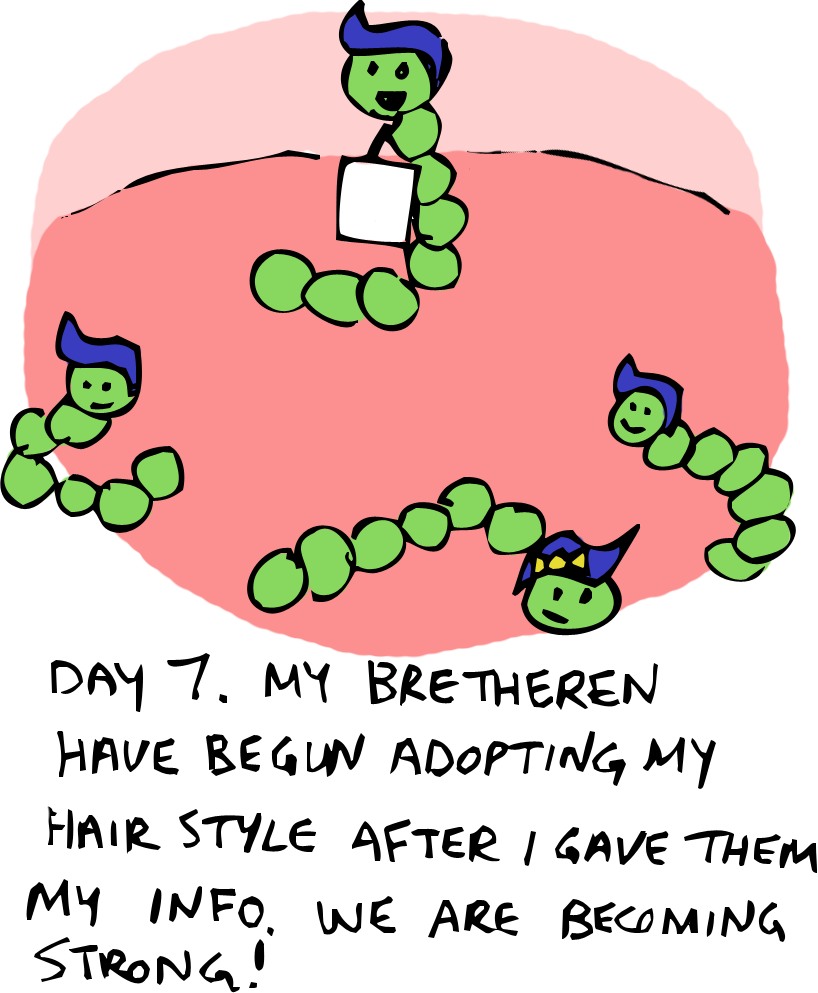
Frequent visitors to our little corner of the internet may remember that last April we told a semi-fictional story about antibiotic-resistant bacteria entitled Curious Geoff and the Antibiotic Resistant Superbug. The gist of the story was the true fact that all over the world bacteria are becoming stronger and are better able to resist the drugs we use to treat them. This is a serious problem given that a new antibiotic drug has not been discovered since 1987… until last week anyway.

On January 7, 2015 the journal Nature published an article by a group of researchers reporting the discovery of a new antibiotic. That alone would have been enough to pique the interest of the science and medical communities, but the authors went one step further in the boldness category and called their article “A new antibiotic kills pathogens without detectable resistance.” As boring as that might seem, in the world of medicine it is the equivalent of calling your paper “Tyranosaurus discovered running surf school in rural New Zealand”… Basically no one was expecting it.


The new drug is called Teixobactin and in trials with mice it has been shown to effectively fight staph infections and antibiotic resistant forms of tuberculosis. That is big news given that the usual option for treating the latter is to prescribe drugs you know won’t work and cross your fingers really hard. Better still, the new antibiotic appears to have no side effects and can be given to mice in doses that make it practical for human use. That is, it doesn’t take a barrel of medicine to get them healthy again. Teixobactin works by inhibiting the growth of cell walls by bacteria, giving the immune system a fighting chance against them off.


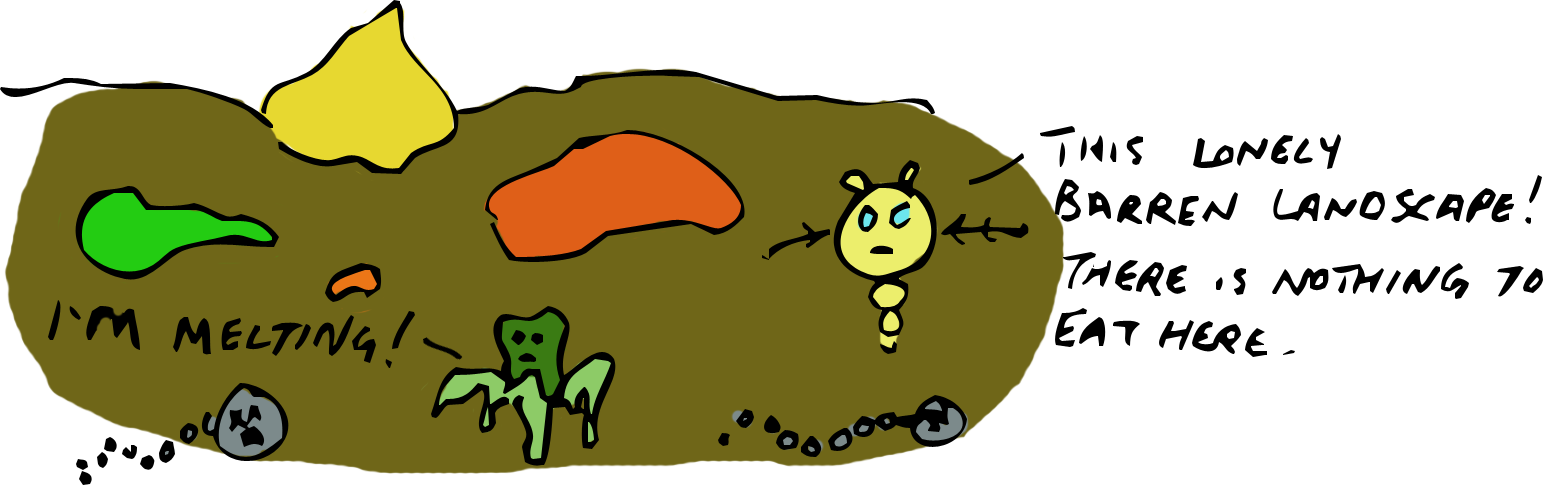
So how did these researchers do it? How did they break science’s 30 year shut-out streak with regards to developing new antibiotics? Well, it turns out that the method they used might be even more of a breakthrough than the discovery of the drug itself. See, the thing about antibiotics is that the effective ones tend to come from bacteria that live in soil. The trouble is that we humans are pretty terrible at convincing soil bacteria to live and grow in labs. In fact, pretty much every one of our 100 or so antibiotics come from the roughly 1% of bacteria that we can get to grow in petri dishes. That means that 99% of the potentially world-changing drugs that exist in nature have been unavailable to us until last week.


The researchers on the new paper developed a technique that tricks soil bacteria into thinking they are at home when really they are doing our bidding. The approach makes use of what the researchers have termed the iChip, despite Steve Jobs not being listed as an author. It works by suspending bacteria in what basically amount to mini-petri dishes with semi-permeable walls, meaning some things can get in and out. Each iChip contains many of these little bacterial prison cells and is suspended in the type of soil that the bacteria usually thrive in. The result is that the bacteria have access to the nutrients they need to grow, but scientists are still able to isolate the bacteria from the soil for their experiments. This sneaky method of growing bacteria might finally give researchers access to an incredible number of new drugs.


Now, a caveat: this does not mean you can disregard all the advice you’ve been given about antibiotics. Teixobactin may be promising but it is nowhere near the point where you can get it from your local pharmacy. It still has to go through human trials, which could take as long as ten years… but hopefully more like 5. In the meantime, we still can’t afford to prescribe antibiotics willy nilly. Every time a farmer gives a healthy cow antibiotics so it can grow faster, we give up a little bit of our edge. Every time you leave a few pills in the bottle after you start feeling better, we lose some ground in the war on germs.

So remain diligent. Be smart about your use of antibiotics and don’t underestimate the enemy. This new paper may give us some hope and a nifty new trick for developing drugs; but until we truly master the soil, we are at evolution's whim in the fight against resistance.


Wednesday, 15 October 2014

5 Organs You Don’t Need

The human body is a pretty amazing thing. Unless you’re a surgeon or a serial killer you will probably never fully appreciate all the crazy organs that people have and the myriad tasks they accomplish every minute of every day. But as well-evolved as our bodies are, there are a few bits and pieces we could do without. With that in mind, we thought we would take a trip around the body this week to talk about some of its most useless organs.

1.   Male Nipples

Let’s deal with male nipples right off the bat. The only reason they exist is because even the manliest man you will ever meet began life in his mother’s womb as a female. When the developmental process gets started all babies, boy or girl, follow the same plan. It is only later that male genes on the Y chromosome kick in and plant the seeds of beards and all the rest of what makes a man a man. The result is that men end up with a pair of purely decorative chest ornaments that serve only as a target for adolescent pain-inducement before the brain is fully developed.


 2.   Coccyx

You may not know it, but you have a tail. It is a remnant from when our ancestors used to run along branches and swing through trees. Back then it aided in balance and since then it has become essentially a 5th limb for some species of new-world monkeys, allowing them to grip branches and hang hands-free. That is great for the monkeys, bu all it is for most people is a lump of fused vertebrae tucked inside the skin at the base of our spines. For an unlucky few it sticks out and makes them self-conscious. It’s only real function these days is as a dominant scrabble word.

3.  Wisdom Teeth

In the land of long-ago your forebears lived harsh lives. They had to chew tough meat right off the bone whenever they could get it. They also had to catch that meat and risk getting a few teeth knocked out in the process. For that reason humans evolved an extra couple pairs of molars to come in later in life to fill in the gaps. However, now that we have toothbrushes and the like wisdom teeth generally do more harm than good.  The most joy they ever bring these days is to the friends of people who just had them removed.

4.  Erector Pili

Aside from eliciting the occasional chuckle from less mature readers of science blogs, the erector pili are another part of the body that serves no useful function. These are the organs that cause your skin to get all bumpy when you’re cold or afraid. Back when we were covered in body hair, they made that hair stand up to help us hold in extra warmth or to look big and mean. You may have seen an angry dog using its erector pili to raise the hair on the back of its neck during a barking fit. Since humans aren't typically fur-covered anymore, the effect is a little less dramatic.


5.  Plica Semilunaris

Our last useless organ is so obscure that Microsoft Word thinks it’s a spelling mistake. It is the plica semilunaris, more common called your third eyelid. It sits in the inside corner of your eye near the tear duct and you can only really see it if you pull your eye wide open. It used to protect our eyes while letting us still see the world when our ancestors lived underwater. Watch a video of a crocodile about to submerge itself and you will see these transparent eye-covers in action. Unfortunately, in humans they have withered to the point of uselessness, although it would be really cool if they still worked. Built-in ski goggles anyone?
Honourable Mention: The Appendix

One organ you may have expected to find on this list is the appendix; that small dangling protuberance at the point where your small and large intestines meet. Granted they do have a tendency to become infected and 1 in 20 people get them removed with no apparent problems, but your appendix isn’t useless. Recent research has shown that the appendix is a storehouse  for some of the beneficial bacteria we learned about in a previous article. The bacteria lie in wait until things go haywire in your large intestine before riding to the rescue. If the appendix were as useless as everyone used to think, it wouldn’t have hung around the evolutionary toolshed for 80 million years and involved in countless other species of animals. So give your appendix the credit it deserves… Unless it gets infected. Then cut it out like a bad habit.


References:


Wednesday, 4 June 2014

The Five Coolest Discoveries since the Birth of Sketchy Science

It may be hard to believe, but it's true. The blue and white marble that we call home has flung itself through one whole rotation of the sun since that bright June day in 2013 when a couple of science-loving fools first set out to explain the secrets of the universe. Sketchy Science is one year old. 


A year is a long time in the world of the internet. Fads come and go, nobodies become household names, science blogs add colour and detail to their sketches. A year is also a long time in the fast moving world of science. That is why for Sketchy Science’s first birthday we have decided to meander our way down memory lane to countdown the 5 coolest discoveries that have happened since we published our first article. If nothing else, it will prove that we have barely scratched the surface of all the cool stuff that is out there to learn about.

1 – Humanity Goes Interstellar
It took a remarkable 36 years from the moment in 1977 when someone at NASA pressed the “Go” button, but in August of 2013 the Voyager 1 spacecraft broke free of the solar system. At the time when the announcement finally came, the little-spaceship-that-could was 18.8 billion kilometers (11.7 billion miles) from Earth and finally free of the heliosphere (the limit of the Sun’s gravity). This marked the first time that anything created by humans has left the gravitational bubble that contains 8 planets, thousands of asteroids, and every single human being who has ever lived or died. It was a big moment in the lives of us apes and it is certainly worth taking a moment to reflect on. Bon voyage Voyager 1. We'll keep the porch light on for you.


2 – Seeing Like a Cyborg
In June 2013, at around the same time that we were putting together our first, rough little article explaining how lightning works, a group of Australian designers were unveiling the world’s first bionic eye. The way it works is a pair of glasses containing a camera send image data to an implant in a blind person’s brain. The implant stimulates the neurons that would typically be responsible for vision and over time those cells learn to respond to certain shapes, allowing someone with a visual disability to be able to see at least a basic outline of the world around them. There is certainly a long way to go before the technology is mastered or perfected, but the Australian invention is expected to be able to help 85% of people who are classified as legally blind.


3 – The Biome in your Belly
If you are a frequent visitor to our humble little corner of the internet, you may remember our article about how the bacteria that live throughout your body play a critical role in your overall health. The truth is, until very recently, scientists had no idea how important each person’s individual bacterial cocktail was. It was only in December 2013 when the journal Science published an article explaining how the micro-ecosystem inside each person is thought to be strongly linked with issues like malnutrition and even cancer. Next time you reach for a bar of anti-bacterial soap or are about to take a swig of antibacterial mouthwash, remember that the bacteria you are trying to kill might be helping keep you alive.

4 – DNA Surgery
Another breakthrough that made it just in time for the holidays was Genetic Micro-surgery. Basically how it works is scientists have begun to understand that a protein called Cas9 is used by bacteria as a weapon to break apart the DNA of viruses that try to harm them. In 2012, researchers discovered that they could use the same Cas9 protein as the world’s smallest scalpel to cut up pieces of our own DNA. That may not sound like such a great idea, but if you have a genetic disorder like cystic fibrosis or hemophilia and your doctor could send a protein into your cells to cut out the genes that are causing you harm, you might be keen to try it out. In 2013 the method took huge leaps forward with more than a dozen teams publishing papers on how they’ve used it to manipulate genes in everything from mice to human cells.


 5 – Our Not-So-Lonely Planet
Finally, as data continues to be processed from the now-defunct Kepler Space Telescope, we are getting closer and closer to proving that we aren’t alone in the Universe. In November 2013 astronomers announced that our galaxy alone is home to 8.8 billion stars with Earth sized planets orbiting in their habitable zones. Obviously they haven’t sat down and counted every single one, but based on the data they’ve collected so far they are confident with the estimation. Assuming 1% of those stars have planets that contain water, and 1% of those watery planets have life, you’re looking at a galaxy with 880,000 life-hosting planets. Getting to them is a whole other issue, though.


So there they are, the 5 (arguably) coolest scientific breakthroughs that have happened in a brief span of time that we have been around trying to explain things. It’s a real shame we couldn’t make the list 100 items long, but no one has time for that. The great thing about science is that discoveries of that caliber will continue to pour in. We are alive at a very exciting time, and we at Sketchy Science would just like to thank anyone reading this blog for allowing us to try and explain some of the reasons why that is true. 


Wednesday, 9 April 2014

Sketchy Science Storybook Corner Presents: Curious Geoff and the Antibiotic-Resistant Superbug

The following is loosely based on actual events... But we made up a lot of the non-sciencey bits.

“Why didn’t you see a doctor sooner?!” exclaimed the man in the yellow hat.

“Mind your own business.” Geoff replied in his increasingly raspy voice to the only other person in the waiting room. He didn’t even know this guy and after five minutes of conversation he was getting a lecture on personal health? There were days when the usually agreeable illustrator for the 6th most popular Canada-based, illustrated science blog on the internet would have tolerated unsolicited advice, but this wasn’t one of them.


What had begun as a tickle in his throat had progressed over the past month to become an omni-present burden on his existence. Every swallow and syllable he spoke ignited an intense fire just below his jawline and Geoff had had enough. Fortunately he didn’t have to deal with this guy or his questionable fashion sense anymore because the doctor’s receptionist stood and called his name before a fist-fight could break out.


“Why didn’t you come see me sooner?!” The doctor asked. Still holding the recently-used tongue depressor in her right hand, the question seemed all the more accusatory. Geoff didn’t really have an answer aside from his hope that whatever was wreaking havoc on his esophagus would work itself out.


“I’m going to give you some antibiotics. Make sure you finish the bottle, even if you start to feel better.” The doctor scribbled something onto her prescription pad, ripped off the page and handed it to Geoff in the manner of an irritated police officer writing a ticket to someone caught speeding home to watch the season finale of The Biggest Loser. That is to say, she was both irritated and disappointed.


Over the next week, Geoff dutifully obeyed the doctor’s orders. Twice a day he summoned his courage and drank a tablespoon of the goopy, greyish antibiotic. "At least it came with a cool spoon shaped like an alligator" he thought to himself. 

Pretty soon things appeared to be getting back to normal. Inside Geoff's body the medicine was beginning to turn the tide in his favour. Antibiotics can either kill bacterial cells directly by impairing their ability to build cell walls or they can smother them, binding to receptors on the outside of the intruder cell and stopping it from interacting with the body. Geoff’s medicine did the latter and it did it quite effectively… That is, until the weekend rolled around.


Earlier in the week, Geoff had considered cancelling his planned weekend adventure to the maple syrup factory with his friends. Now that he was feeling better, temptation got the best of him. By Friday he could hardly believe he had ever been sick. He loaded up his suitcase, got on the bus and rode to meet his friends. As he closed the door and turned the key to lock it, the half full bottle of medicine sitting on the bathroom counter was the furthest thing from his mind.


By Monday night, the game had changed. As Geoff indulged his sweet tooth with his friends, the bacteria in his throat had regrouped. Many of them had been killed the previous week by the medicine, but those that were left were the strongest of the strong. There had only been a few of them left when Geoff got on the bus, but in the absence of the killing blow from the medicine, they had multiplied. To make matters worse, a new bacteria had found it’s way into Geoff’s throat over the weekend. It was a largely harmless bacteria but it contained a piece of DNA that helped it form a smooth, slippery outer membrane. 

This new bacteria made friends with the remaining disease causing bacteria and (as bacteria sometimes do) they traded DNA. Now the bacteria that the medicine had been meant to kill had mutated so that the antibiotic could not stick to them properly.


The new and improved super-bug used its good fortune to regroup.


Things had gone from bad to worse.


When he got home, Geoff resumed taking his medicine, but it was too late. The super-bacteria continued to multiply, unimpeded. He went back to the doctor who prescribed stronger antibiotics, but before long Geoff found himself in the hospital.


The next few weeks were rough on his body, but fortunately he was a young, physically fit person and over time his body was able to fight off the infection. He lost a bunch of weight and had a miserable time (despite having all the jello he could eat), and as he left the hospital he vowed to never let a bug turn super on him again.

Geoff would never know it, but the reason that his infection was able to mutate was because of the steak he enjoyed on Friday night. Many farmers around the world use antibiotics to help their livestock grow larger, faster. Over-using antibiotics gives bacteria more chances to evolve resistance to them. That is exactly what happened with the bacteria that eventually traded DNA with Geoff’s infection.


From that day on, Geoff did his part to combat the evolution of antibiotic-resistant bacteria. He didn’t take antibiotics when he had the cold or a flu because he knew that these infections were caused by viruses and not bacteria. Viruses aren’t alive in the same way bacteria are, so antibiotics are useless against them. He also stopped using antibacterial hand soap and instead used alcohol-based hand sanitizer which bacteria can’t evolve resistance to.  Over many years, Geoff’s good behaviour influenced his friends to do likewise. Eventually even farmers got the message and stopped needlessly pumping animals full of medicine that could have been used to help creatures that were actually sick.


And they all lived happily ever after… Except they got sick a lot from viral infections, but that’s another story.

References:


Wednesday, 4 December 2013

The Immortal Fruitcake: Can We Make Food Last Forever?

Few foods are as closely connected to Christmas as fruitcake, and few foods are as deeply dreaded. To be sure, fruitcake is a strange food. It combines the healthy and nutritious (cherries, mangos, cranberries, etc), with the unhealthy and delicious (sugar, butter, etc.), and coats the whole mess in a tantalizingly glistening layer of alcohol. Put that way, fruitcake shouldn’t have such a bad reputation. Part of the problem with fruitcake, however is that most recipes require you to bake the cake about a month before you plan on eating it. The general rule with preparing one of these masterpieces is “the older the better” as each day you brush on a little more booze to keep the cake moist. An unintended consequence of the liquor, however, is that fruitcake is known to last a really, truly, ridiculously long time.


The Virginia Museum of Science is one of the only sources online that dares to put a figure on the lifespan of fruitcake. They set the expiration date for a properly made cake stored in an airtight container at 25 years. The reason for the inflated lifespan is that fruitcake is by its very nature inhospitable to bacteria, and bacteria are the reason that all foods spoil.


Bacteria cannot survive to breakdown fruitcake because they cannot penetrate the alcohol that encases it. Alcohol kills bacteria by dissolving cell membranes and denaturing the proteins bacteria need to function. Eventually, though, alcohol itself begins to break down and bacteria begin, disappointingly, to penetrate the boozey barrier. Certainly, 25 years is a very long time for a cake to remain edible, but what would you need to do to make one last forever?


Food preservation is something that humans have been working on since we first learned about food poisoning, and we have gotten pretty good at it. Techniques abound but they all work on the same principle: slow down or remove any bacteria or bacterial processes. The most common method is refrigeration which uses cold temperatures to slow down the metabolisms of bacteria and allows food to last much longer. Refrigeration is great for foods that rapidly spoil like milk or meat, lengthening their edibility window from a few hours to a week or more, but it won’t do much to make our fruitcake truly immortal.

Another great option if you want food to last a really long time is canning. Canning involves heating or boiling food at a temperature sufficient to kill bacteria (usually to at least 66°C/150°F). Once the bacteria are dead, you seal the can to prevent any new microbes from staking a claim. All that is left is to put the can away until you’re ready to enjoy its contents. The Food and Drug Administration of the United States has analyzed 100 year old canned fruit from Antarctic expedition and detected no microbial growth, advising that as long as the can itself is not compromised, the food remains edible after a century.  The only drawback to canning is that heating your food can significantly change its taste and texture.


Canning is definitely a great option, but it isn’t the only one that will take a fruitcake to the doorstep of eternity. Dehydrating and Freeze Drying are two more options that work on the principle that bacteria need water to function. Dehydrating is the easier of the two processes. All it requires is that the food be surrounded with sufficiently dry air to draw out all the moisture. The resulting food will last a very long time (ad infinitum if properly stored), but who wants a dry fruitcake? To overcome the obvious shortcomings of moistureless cake, we can freeze dry. To freeze dry our fruitcake, all we need to do it freeze it (which many people will tell you actually improves a fruitcake) and place it in a strong vacuum. The vacuum causes the water in the food to sublimate (turn directly from solid to vapor) and increased its shelf-life indefinitely. To reconstitute our fruitcake all we need to do is add water and microwave. This process is more ideally suited to the fruit portion, rather than the cake.


We now understand a few ways that we can launch a fruitcake into the future, but each has its drawbacks. If we want to eat our fruitcake 10,000 years from now and have it taste pretty much the same as it does today, we have to get nuclear…


Food irradiation can kill bacteria without significantly altering food. All you need to do is seal the food in plastic and zap it with a healthy dose of radioactivity. The result is the most sterile fruitcake possible as long as the seal never breaks. The only reason irradiation is not pursued more actively is that people seem to have a problem putting the words “nuclear radiation” and “food” in the same sentence. But if our goal is to pass a fruitcake on to our great-great-great….great-great-grandchildren, a little radiation seems like it is their problem, not ours. Just include a note that says wasting food puts them on the naughty list.


Wednesday, 25 September 2013

Beneficial Bacteria – The Biome in Your Belly

Most people think of bacteria as something to be avoided. We steer clear of shaking hands with a sick co-worker, we filter and treat our water, and some of us even carry around little bottles of hand sanitizer. The war on microbes is both ubiquitous and illusory.  You can certainly take measures to avoid harmful germs but you will never be able to completely rid yourself of bacteria, nor would you want to.


Mary Roach said it best in her newest page-turner Gulp:Adventures on the Alimentary Canal, “Like people, bacteria are good or bad not so much by nature as by circumstance.” You have loads of bacteria in your ears, mouth, nose, throat, and gut and each of them either serves a useful function or doesn’t cause you any harm at all. That is unless you put them somewhere they aren’t supposed to be. For example, take a few Streptococcus bacteria from your throat (where the worst they will cause is a sore throat) and put them in your bloodstream and you will swiftly find yourself dying from necrotizing fasciitis, AKA flesh eating disease.


One place where bacteria seem to be the body’s greatest ally is in your colon. They aid in digestion, produce vital nutrients, and even help kill invader bacteria. Scientists are only now really beginning to appreciate the full-fledged ecosystem that exists inside your large intestine. And when I say “your” I mean it. Each person is host to their own custom mix of bacteria. It’s easy to think of them as parasites living off of your digestive tract, but in a very real sense they help make you, you.


Unfortunately, being you is not always a thrill. Even those of us with strong stomachs will get laid up with gas, bloating, or diarrhea at some point, no matter how careful we are about our health. In the worst cases, we can open the gate to evil bacteria that can produce chronic problems by overpowering your custom-built intestinal police force and hijacking your innards to cause you harm.

One of the worst examples is the bacterial infection C. difficile. This bacteria, which is most prevalent in hospitals, can set up shop in your colon and cause you all kinds of problems. The most embarrassing and life altering can be a persistent inability to… how can I put this?… trust a fart. The standard treatment is a course of anti-biotics, but for every course of treatment that doesn’t completely wipe them out, your chance of relapse doubles.


When all else fails there is one treatment that is almost guaranteed to work. The problem is, it is equal parts captivating and disgusting. The idea is to take the bacterial ecosystem from someone else’s colon and grow a replica in the infected person. It all sounds very scientific until you realize that it is called fecal bacteriotherapy and you find out how it is achieved…


First, the patient is given a run of powerful antibiotics to kill pretty much every bacterium in their colon. Next, a donor (anyone with a healthy gut) is asked to (I am trying to choose my words carefully here) collect a sample of their own detritus. The sample is then blended (yes, with a blender) and administered into the sick person’s large intestine. It may sound gross (once you figure out what I’m talking about) but in 93% of cases it works. The bacteria from the healthy person colonize the troublesome colon and health is restored in a matter of hours. A welcome relief for a person who may have previously been unable to leave their own home for fear of an embarrassing intestinal event.


Your body is an amazing partnership of organs and organisms. Finding and maintaining a healthy balance is the key to living a long and enjoyable life. But even if you’re not preoccupied with increasing longevity or running a marathon, you have one powerful incentive to try and maintain a fit digestive tract: Nobody wants a poop transplant.