Showing posts with label medicine. Show all posts

Wednesday, 24 February 2016

The World’s Deadliest Animal: Zika Virus and the End of Mosquitoes

Mosquitoes are the worst. Nothing ruins a hike or a camping trip like a swarm of these blood-sucking, ear-buzzing, itch-inducing pests. Most of the world’s population will, at some point, be confronted with these horrid little animals and ask the inevitable question: do they even serve a purpose?

At their worst, mosquitoes go from being ridiculously annoying to horrifyingly dangerous. We may have a more palpable innate fear or sharks, lions, and snakes but let’s not forget that the deadliest animal on the planet is tiny and airborne. Mosquitoes spread disease like it’s their job. Malaria, Dengue Fever, West Nile, mosquitoes carry them all. It is an incredibly fortunate genetic quirk that they can’t spread HIV. For some reason, the virus dies when subjected to a mosquito’s internal environment, but if the day ever comes when a mutation changes that, then we could all be in big, big trouble.


The latest world health crisis is the spread of the Zika virus in Central and South America, brought to you (as you might have guessed) by these two-winged demons of the sky. Zika isn’t especially horrifying in its obvious symptoms. Whereas Ebola victims violently lose bodily fluids until their organs shutdown, 80% of people with Zika never suffer so much as a sniffle. For the one-in-five people who do get sick, things aren’t all that bad either as far as public health crises go. Most commonly, Zika will give you a rash and a fever that subsides in a week or so. At worst, you might get some dry, itchy eyes as well, but Zika is no worse than an afternoon at your aunt’s cat-infested bungalow if you happen to have an allergy.

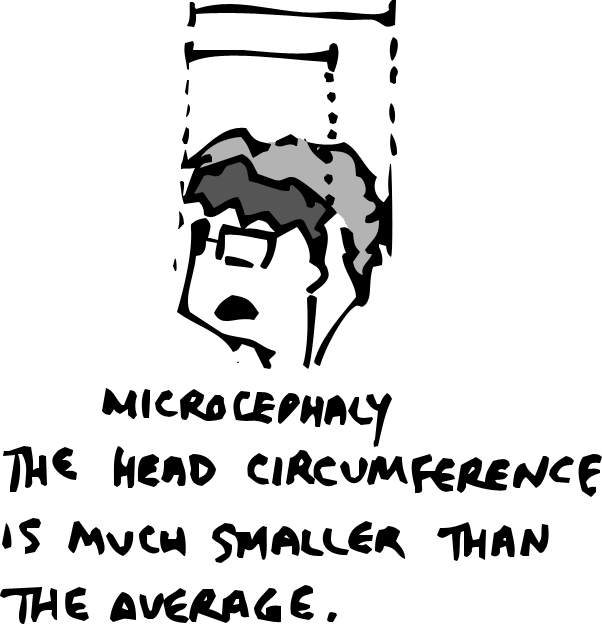
The real threat from Zika is to pregnant women, or more specifically, their children. Zika has been linked to devastating birth defects, most famously microcephaly. Microcephaly is a condition where babies are born with small heads and brains. It is often responsible for severe mental deficits, which is what makes Zika so scary. A pregnant woman can pass the disease onto her baby without ever knowing she has it.


Zika is spread almost entirely by mosquitoes in tropical countries. A few cases have been linked to sexual contact between people, but the usual process is that a Zika-infected mosquito bites a person who becomes infected, and that person is bitten by more mosquitos, who in turn become infected and spread the disease to everyone else they bite. That means that Zika can spread rapidly and is very difficult to control. Health experts predict that eventually every country in the Americas, except for Chile and Canada, may become infected.


Researchers are doing their best to develop a vaccine, but the most effective method to fight Zika might be to target the mosquitoes themselves. If we decided that it were ethically justifiable to do so, we could potentially bring mosquitoes to the brink of extinction, using what we already know about genetics. Even before the current Zika outbreak, scientists had raised the question of wiping them of the face of the Earth. The method is shockingly simple. Genetically modified male mosquitoes are released into the wild to breed with females. The females lay eggs as normal, which hatch into the next generation. The only catch is that all of the offspring are sterile.


It may sound like a small-scale solution, but researchers are confident it could work. It has been estimated that genetically-altered males could wipe out 80% of the world’s mosquitoes in 36 weeks. Within a year, the world could be basically mosquito-free. It would be a canoeist’s paradise.


The problem is one of ethics and unforeseen consequences. First, should humans be allowed to wipe out another species just because we don’t like them and we are able to do it? What makes our existence so much more valuable than theirs? It’s especially troubling when you consider that humans, not mosquitoes, are the cause of much of what currently ails the world, from climate change to pollution to species extinction. Second, what if we’re missing something? What if mosquitoes play a vital role in our ecosystem that we don't yet understand and removing them brings it crashing down?

It may seem far-fetched, but consider the fact that the only reason most of the remaining rainforests in the world haven’t yet been cut down is because of the threat of mosquitoes, according to science writer David Quammen. If we wipe them out, who is to say that another Las Vegas won’t pop up along the banks of the Amazon, destroying one of the richest environments on Earth? These are big questions that require thought, but it is hard not to see the merit when you consider the pain one little pest can cause.


Wednesday, 10 February 2016

Alex St. Martin: The Man with a (literal) Window into Digestion

Generally speaking, the things science teaches us are the result of small experiments that push forward our understanding of the world, a little bit at a time. However, every once in a while, an event or a person comes along that gives our knowledge a rapid jolt forward. When these people are scientists, we tend to remember their names (Newton, Einstein, Darwin, etc.), but we tend to forget the names of the ordinary people who, often through extraordinary circumstances, taught us things about our world that we otherwise wouldn’t know. A few months ago we learned about Phineas Gage – the man who took an iron bar through the head and lived to tell the tale – and everything he revealed to science about the brain. Today, we’ll meet another similarly unfortunate individual.

On the 6th of June 1822 , at Fort Mackinac, a fur trading post in northern Michigan, an 18 year-old man named Alex St. Martin was loading up his canoe for another hard day in the woods. St. Martin was a French Canadian fur trapper, a tough breed to begin with; but before lunch time he would prove himself to be of heartier stock than the average voyageur. Sometime that morning, a gun accidentally went off. Word arrived with the Fort’s doctor, William Beaumont, that St. Martin had been shot. He rushed to the scene and inadvertently stumbled into one of the most fruitful partnerships in medical history.


St. Martin lay bleeding in the street with a hole in his rib-cage about the size of the palm of his hand. Through the hole spilled all manner of gore. There were bits of bone, muscle, and even part of a lung. But what caught Dr. Beaumont’s eye was the meat, bread, and coffee which, hours earlier, had been St. Martin’s breakfast. The bullet, it appeared, had punched a hole into the man’s stomach. Beaumont stitched up the wound, and over the next several weeks, performed a number of surgeries without the aid of anesthetic or disinfectant. St. Martin miraculously survived all this, but understandably grew fed up with surgeries. The end result was that he reached a stable condition but still had a hole in his stomach.


The medical term for the hole is a fistula. Today, farmers routinely give them to cows so they can monitor their digestion, but back in 1822 it was a new and valuable concept. In the early 19th century, the stomach was something of a mystery. We knew that food went in and waste came out, but we had basically no idea what went on in between to turn food into muscle and energy. The opportunity wasn’t wasted on Dr. Beaumont who, under the guise of charitable action, offered St. Martin a job as a handyman at his home to make up for the fact that he could no longer trap. With few options, St. Martin agreed to take the job.

Things presumably started out normally enough, but eventually Beaumont somehow convinced St. Martin to allow for a few experiments. In 1825, Beaumont began lowering bits of food through the fistula and into St. Martin’s stomach on pieces of string. He would pull the items out after various amounts of time and record how digested they were. This is how science learned that hard-boiled eggs take three and half hours to digest and boiled animal brains take an hour and 45 minutes. Beaumont also took to tasting the stomach juices and the fistula itself to measure acidity… In short, things got weird.


In fact, they got so weird, that eventually St. Martin had enough and fled back to Canada where he started a family and even began trapping again. Beaumont didn’t give up; he wrote letters, pleading with St. Martin to come back, offering him money and land to support his family. Apparently having a hole in your stomach is a significant disadvantage in the fur trapping game, because St. Martin did agree to go back after several years.

It was during this second stint as Beaumont’s live-in guinea pig, that the fistula experiments really began to advance science. Beaumont eventually discovered that when food was introduced to the stomach, papillae emerged from the stomach wall and secreted a clear fluid that was the means of digestion. This was the first evidence that digestion is a chemical, and not a mechanical, process. Beaumont eventually proved this idea by removing some stomach acid and observing digestion outside the body.


This work made Beaumont famous. He toured the world demonstrating his findings, often with St. Martin in toe as a medical side-show of sorts.

St. Martin lived out the rest of his life (he lived to be either 78 or 84 depending on who you ask - either way, a long life) as an oddity. Upon his death in 1880, his family opted to delay burial so his body could begin to rot, eliminating the chance that doctors would dig him up for an autopsy. If we can take one additional thing away from St. Martin’s life story, it is that scientific leaps sometimes come at a cost. Modern medicine owes a pretty big debt to tough and tolerant patients like him.


Wednesday, 3 February 2016

Head Transplants: Get 6-Pack Abs the Hardest Way Possible

Your head is a very personal thing. It is what people use to identify you. It is the exclusive home of four of our five commonly recognized senses. It is the case that contains our brains, the source of everything we know, think and feel. Even our language recognizes the importance of the head in personality and intelligence. Someone acting crazy is said to have “lost their head” and a company’s primary office is their “head”quarters. There is one surgeon currently working in China, however, who might force us to raise some questions about where our heads fit into our identities.

Earlier this year, Dr. Sergio Canavero duplicated an experiment first attempted in the 1970’s. He cut the heads off of two rhesus monkeys, tossed one in the medical waste bin and sewed the other onto a body to which it didn’t belong. By lowering the temperature of the head to 15°C (59°F) and carefully maintaining the blood supply, Dr. Canavero demonstrated that the monkey could survive the operation without sustaining brain damage. His goal is to carry out the procedure on a Russian (human) volunteer, who suffers from a fatal, muscle-wasting condition called Werdnig-Hoffman disease.


The story isn’t all head-swapping good times, however. The monkey that survived the procedure may have found itself envying the one whose head ended up in the waste bin because, while it may be technically possible to maintain blood flow and avoid brain damage, there is one significant obstacle to performing totally successful head transplants: reconnecting the spinal cord. In the end, the monkey was euthanized a few days after the operation due to ethical concerns. Those concerns included the subject not being able to walk, breath, make noises, or control its bladder. The actions the transplanted head was capable of were limited to moving its eyes and facial muscles and attempting to bite whoever came near it… not that you could blame him.


What it comes down to is that your spinal cord is a remarkably complicated thing. The twisting rope of nerves, that winds its way down your backbone and into every part of your body, is what allows the lump of grey matter up in your skull to interact with the world. To make an out-of-date gaming reference, it is the equivalent of the cable connecting your Nintendo 64 controller to the game console. Sever it, and Mario becomes pretty immobile pretty fast. And the real kicker is that over the thousands of years we’ve been making progress in medicine, we still haven’t figured out a way to fix a disconnected spinal cord.


The problem is that, unlike most parts of your body, your spinal cord doesn’t regenerate on its own. We know that after an injury, nerves begin to reach out to reconnect with other parts of the body but chemicals released at the point of injury and scar tissue prevent the recovery from having any real effect.

Things aren’t all doom and gloom, however. Some research in the past decade has begun to inch closer to a treatment for spinal cord damage, making head transplants a slightly less crazy notion. In 2013, researchers at the Case Western Reserve University and the Cleveland Clinic showed that when they severed the spinal cords of 15 rats, they were able to regain some basic functions, like bladder control, by bathing the nerves in a mix of two chemicals, Chondroitinase and Fibroblast Growth Factor (FGF), and reinforcing the connection with some metal wiring.


Even more impressive, in 2014, surgeons in Poland, lead by Prof Geoff Raisman, chair of neural regeneration at University College London's Institute of Neurology, treated a paralyzed man’s spinal cord using cells from his own body and observed that, with physical therapy, he was eventually able to regain the ability to walk with the help of a metal frame. The treatment took cells from one of the man’s olfactory bulbs – normally used to smell stuff – and transplanted them into his spinal cord above and below the site of the injury. The gap between the two sections of the cord was reconnected using nerve tissue from the man’s ankle. Researchers believe that because the olfactory bulbs are one of very few areas where neurons regrow throughout a person’s lifetime, they may be the key to treating paralysis without fear of the body rejecting the new tissue.


Even with these breakthroughs though, the head-switching Dr. Canavero deserves some criticism. Aside from the ethical issues that go along with torturing monkeys, he breached scientific protocol and reported his findings to the media before any other scientist had a chance to review them, making his claims doubtful at best. In the end, it may be a while before we can put our heads onto younger, fitter bodies but with properly conducted research and a steady supply of funding, we may be able to help paralyzed people walk again. That is the work that is worthy of our attention.


Friday, 25 September 2015

Sketchy Fact #97: Unfortunate Frogs

Until the 1960’s, the most reliable pregnancy test available was to inject a woman’s urine into an African clawed frog. If the woman was pregnant, the frog would ovulate.


Friday, 26 June 2015

Sketchy Fact #95: Cruisin' for a Bruisin'

The changing colours of bruises is a result of your body breaking down and reusing the hemoglobin in spilled blood cells. Hemoglobin is broken down into a green pigment called biliverdin. Biliverdin is broken down into bilirubin, which is a golden brown colour.

Wednesday, 15 April 2015

Medieval Medicine: Fighting Modern Infections with Long-Lost Potions

Looking back at the history of medicine is usually an exercise in presentism. It is supremely interesting and plenty of fun to learn about the things that people used to think were medical problems (like hysterical, disobedient women) and the treatments they came up with to treat them (eye of newt, anyone?). The problem with presentism is that we assume modern medicine is better than what came before it, but the truth is, ancient doctors sometimes knew things that we have since forgotten. Just as ancient cultures were often better as sustainably making use of the environment than we are now, it should be no surprise that they were skillful at treating what ailed them.

A perfect example of ancient acumen popped up earlier this month in science news columns around the world as researchers and historians at the University of Nottingham in the UK cooked up an ancient brew to combat an infection that even modern meds have trouble fighting.


“Take cropleek and garlic, of both equal quantities, pound them well together… take wine and bullocks gall, mix with the leek… let it stand nine days in the brass vessel…” read the 1,000 year-old Anglo-Saxon text from which they pulled the recipe. The potion was used to treat “stye,” otherwise known as an infected eyelash follicle.

The bacteria at the heart of the infection is known today as methicillin-resistant Staphylococcus aureus (MRSA). The key thing to note in that name is “methicillin-resistant,” meaning that the bacteria are of the sort that we learned about last year in our semi-fictional story about Curious Geoff and the Antibiotic-Resistant Superbug. So if our most powerful antibiotics today have a tough time with MRSA, how did the ancient remedy fair?


As you might have guessed based on the existence of this article, the answer is pretty damn well. It should be noted that the researchers needed to make a few modern revisions to the recipe. Garlic and leeks have changed a lot since the 9th century and brass vessels are both expensive and difficult to keep sterile (the researchers ended up using glass bottles with pieces of brass immersed in the other ingredients). In the end, however, the tweaks didn’t seem to reduce the effectiveness of their medieval gunk. The concoction killed 90% of MRSA bacteria, the same proportion as the conventional treatment that doctors use today to treat infections, called Vancomycin.


This isn’t the first time we have rediscovered an ancient medical treatment that rivals modern scientific wizardry. Artemisinin, a potent drug in the treatment of malaria was discovered by the Chinese military in the 1970's as they combed through ancient texts looking for treatments they could use to keep their Vietnamese allies healthy as they fought a war with the US.  We also still use leeches to help relieve patients of infected blood. What this most recent discovery means, however, is that we might be able to pinpoint why it kills resistant bacteria and use that knowledge to develop treatments for other antibiotic-resistant infections.


As bacteria continue to evolve resistance to our best treatments, we will need all the help we can get. Some of the answers will likely come from nature as get better at making use of plants, soil bacteria, fungi, etc. But as counterintuitive as it might seem as we ponder the future of medicine, it occasionally pays to look deep into the past. You never know what you might discover if you keep an open mind.


Tuesday, 13 January 2015

Savior From The Soil: The First New Antibiotic in 30 Years!

Frequent visitors to our little corner of the internet may remember that last April we told a semi-fictional story about antibiotic-resistant bacteria entitled Curious Geoff and the Antibiotic Resistant Superbug. The gist of the story was the true fact that all over the world bacteria are becoming stronger and are better able to resist the drugs we use to treat them. This is a serious problem given that a new antibiotic drug has not been discovered since 1987… until last week anyway.

On January 7, 2015 the journal Nature published an article by a group of researchers reporting the discovery of a new antibiotic. That alone would have been enough to pique the interest of the science and medical communities, but the authors went one step further in the boldness category and called their article “A new antibiotic kills pathogens without detectable resistance.” As boring as that might seem, in the world of medicine it is the equivalent of calling your paper “Tyranosaurus discovered running surf school in rural New Zealand”… Basically no one was expecting it.


The new drug is called Teixobactin and in trials with mice it has been shown to effectively fight staph infections and antibiotic resistant forms of tuberculosis. That is big news given that the usual option for treating the latter is to prescribe drugs you know won’t work and cross your fingers really hard. Better still, the new antibiotic appears to have no side effects and can be given to mice in doses that make it practical for human use. That is, it doesn’t take a barrel of medicine to get them healthy again. Teixobactin works by inhibiting the growth of cell walls by bacteria, giving the immune system a fighting chance against them off.


So how did these researchers do it? How did they break science’s 30 year shut-out streak with regards to developing new antibiotics? Well, it turns out that the method they used might be even more of a breakthrough than the discovery of the drug itself. See, the thing about antibiotics is that the effective ones tend to come from bacteria that live in soil. The trouble is that we humans are pretty terrible at convincing soil bacteria to live and grow in labs. In fact, pretty much every one of our 100 or so antibiotics come from the roughly 1% of bacteria that we can get to grow in petri dishes. That means that 99% of the potentially world-changing drugs that exist in nature have been unavailable to us until last week.


The researchers on the new paper developed a technique that tricks soil bacteria into thinking they are at home when really they are doing our bidding. The approach makes use of what the researchers have termed the iChip, despite Steve Jobs not being listed as an author. It works by suspending bacteria in what basically amount to mini-petri dishes with semi-permeable walls, meaning some things can get in and out. Each iChip contains many of these little bacterial prison cells and is suspended in the type of soil that the bacteria usually thrive in. The result is that the bacteria have access to the nutrients they need to grow, but scientists are still able to isolate the bacteria from the soil for their experiments. This sneaky method of growing bacteria might finally give researchers access to an incredible number of new drugs.


Now, a caveat: this does not mean you can disregard all the advice you’ve been given about antibiotics. Teixobactin may be promising but it is nowhere near the point where you can get it from your local pharmacy. It still has to go through human trials, which could take as long as ten years… but hopefully more like 5. In the meantime, we still can’t afford to prescribe antibiotics willy nilly. Every time a farmer gives a healthy cow antibiotics so it can grow faster, we give up a little bit of our edge. Every time you leave a few pills in the bottle after you start feeling better, we lose some ground in the war on germs.

So remain diligent. Be smart about your use of antibiotics and don’t underestimate the enemy. This new paper may give us some hope and a nifty new trick for developing drugs; but until we truly master the soil, we are at evolution's whim in the fight against resistance.


Wednesday, 22 October 2014

Epidemiology: How to know when things are safe and when they R-naught

As the ebola epidemic continues to rage in west Africa and new cases start to pop up in countries like Germany and the US, people are beginning to pay attention to the study of how diseases spread through groups.  Movies like Contagion  and Outbreak give some idea of the work that gets done when a disease begins to pose a threat, but not many of us really understand the nuts and bolts of the science known as epidemiology. Where do diseases come from? How are they spread? Why has the current ebola epidemic proven to be so difficult to contain if, as we learned a few articles ago, the disease isn’t actually all that easy to catch? It turns out the answers are as interesting as the questions.

Where do diseases come from?

How can a disease like ebola suddenly burst onto the world’s stage? When you stop and think about it, it doesn’t make a lot of sense. If ebola is so deadly and is able to spread from person to person the way it has been for the past 10 months, why isn’t it something that is always going on? Well, in the case of ebola and many other diseases that harm people, the reason is that diseases have reservoirs where they hide out between epidemics.

When I say "reservoir" I don’t mean that there is a dam somewhere and behind it is a churning green soup of ebolavirus. Disease reservoirs are animals that viruses can live within without causing any ill effects. In the case of ebola, the reservoir is thought to be fruit bats. The reservoir for influenza is sea birds. The reservoir for plague is fleas. Every animal out there is a potential host for the next horrifying pandemic. Every so often humans come into contact with these animals in a way that allows diseases to jump into our bodies, this is called a spillover. For more on that, check out this great book published last year by David Quammen. Diseases that spread this way, from animals to people are called zoonoses (plural of zoonosis) and they make up most diseases you can name.


How do diseases spread?

The spread of a disease through a group of people depends on a number of things. Epidemiologists bring a few different factors together to present that information in a neat and tidy number they call R­­0 (pronounced “R-naught” because being British is fun). In its simplest terms R0 is the average number of healthy people that a sick person will infect while they have the disease. Ebola has the same R0 as hepatitis C: 2. That means that if I had ebola I could expect to infect 2 new people before I either died or was cured, maybe my wife and my doctor, or a doctor and a nurse. Either way, a couple of you suckers are going down with me. R0’s of other notable viruses include 4 for HIV and SARS, 10 for mumps, and a whopping 18 for measles.


R0 ­ depends on a few different things: the probability of infection after being exposed to an infected person, the average rate of contact between infected and susceptible people (some people will be naturally immune), and how long the disease is contagious for. What is working against ebola’s R0 ­are the facts that the rate of transmissible contact between people is low (you need to be in physical contact with a person’s bodily fluids to catch it), and the fact that the disease is only contagious when a person starts to show symptoms (which usually isn’t very long… because ebola kills too quickly). Diseases with higher R0 ­are able to spread through the air or survive in water.


Why haven't we been able to stop ebola yet?

Aside from the actual treating of sick people and coordinating quarantines and such, epidemiologists are also disease detectives. It is their job to determine who the first person to catch the disease was in an outbreak (the infamous "patient zero") and by what means it was able to spread. The full story of the current ebola outbreak can be found in Jeffery E. Stern’s article Hell in the Hot Zone, published earlier this month by Vanity Fair – it is definitely worth reading.

The Cliff Notes version is that cutting down the rainforest in West Africa brought people into closer contact with bats, leading to the spillover. After that, the international response was swift and well-coordinated, but it was not communicated well enough. The problem seems to have been that the teams of doctors and scientists in hazmat suits that rolled into the afflicted villages did not tell the friends and family of patients what was going on in a way that they could understand and trust. All those people saw was their loved ones being carried into tents by people in space suits and disappearing forever. After that people got understandably scared of western doctors. They didn’t report infections and the disease was able to spread at the same time that health care workers thought the epidemic was slowing down due to the empty hospital beds all around them. When the disease finally got to the point where it was impossible to hide and people started seeking out treatment, it was too late.


Epidemiology is a very cool field of science that often goes unappreciated. There are currently thousands of hard working people putting themselves at risk to contain the situation in Africa, but they need more help. If intervention isn’t stepped up soon, the rate of new cases of ebola is expected to rise to 10,000 per week, because even with an R0 of 2 the spread is still exponential.  If you are able, please donate to Doctors Without Borders, who are leading the fight against the spread of the disease. Your money won’t only go towards treating the sick, it will buy gloves and masks and proper equipment to help keep those doctors as safe as possible.


Wednesday, 16 April 2014

Infecting with Immunity: How Vaccines Actually Work

One of the major challenges scientists face is communicating important information to the general public. As brilliant as many of them are, hours spent in a lab hunched over a microscope do little to improve a person’s ability to explain things simply and comprehensibly. Complicating things further is the fact that scientists are trained to constantly question and test their ideas so they say a lot of things like “we believe” and “these results suggest” when really they mean “I am sure this is true, these are facts.” When you’re talking about the evolutionary history of Amazonian frogs or something like that, it tends not to matter; but occasionally a topic comes along where a clear explanation of how things work is even more important than a detailed reporting of the facts. Vaccines are one of those topics.


Right now in the Fraser Valley of British Columbia Canada, several hundred people (mostly children) are infected with an unpleasant and occasionally fatal illness that scientists basically cured a long time ago. Over 200 cased of highly contagious measles have popped up in the region and a few infected people have found their way to Ontario and the Atlantic coast, largely because the Fraser Valley has one of the lowest measles vaccination rates of anywhere in Canada (between 70 and 80%).

Much of the problem lies in the fact that vaccines inject viruses and bacteria into people’s bodies. Generally speaking we are taught that this is a bad thing, so our instinctive reaction is to avoid it. Teaching people that infections are bad and then telling them that you need to inject them with a virus is generally a hard idea to sell because, quite frankly, it makes you seem insane.


The truth is vaccines actually are made of the viruses and bacteria that they are trying to prevent. To understand why that is necessary we need to understand the immune system. You see, when an unfamiliar virus or bacteria makes its way into your body it sounds an alarm that activates an immune system response. These invading organisms are called antigens and their goal is to replicate as much as possible. 


Since our bodies are not designed to handle that sort of thing the results can be very bad, resulting in sickness and sometimes even death.


Your body doesn’t like dying, so once that alarm is sounded you’re white blood cells get to work. Your T-cells identify which cells in your body are infected by the intruder and destroy then to try to contain the infection. Meanwhile your B-cells produce antibodies, which attack antigens directly and try to prevent them from infecting more of your body’s cells.  


Vaccines take advantage of this response by tricking your body into thinking it has been infected by a specific virus or bacteria, but in order to do that they need to introduce some of these intruders into your body. Obviously the goal of vaccines is to prevent infection so it wouldn’t make much sense to pump you full of measles. Instead, vaccines use a weakened or inactive (dead) form of the intruder/antigen.

Vaccines that use weakened antigens are called live-attenuated vaccines, because they inject still living infections. The trick with live-attenuated vaccines, however, is that they use the dumbest, laziest individual viruses and bacteria possible. To create these vaccines scientists take something dangerous like measles and give it a relaxed, cushy life in a test-tube. The infection is continually transferred from one test tube to another, each time getting a little more used to the good life. After enough time and transfers (77 in the case of the measles virus) the infection is so used to not have to do anything to survive that it has lost most of it’s tenacity. When injected into the bloodstream these infections reproduce at most 20 times rather than the thousands and thousands of times they normally would. Your body is easily able to identify and destroy these antigens.


The cool thing is that you immune system has a great memory, so once the infection is gone your B-cells continue to produce the antibodies that can kill it, making you immune for life.

Inactivated vaccines use dead viruses that don’t reproduce at all. The benefit to this is that there is zero chance of any kind of negative reaction (live-attenuated vaccines can lead to soreness at the injection site and occasionally some mild symptoms), the downside is that you often need multiple shots to maintain immunity because your body thinks the disease is a dud.


One of the most publicized fears about vaccines is so-called link between vaccination and autism. This link is a myth. It arose when some people discovered that a disinfectant used in some vaccines (Thimerosol) contained mercury. There is however no reliable research supporting this claim (Parker et al., 2004). Even still, most vaccines now contain no Thimerosol because the companies that produce the treatments want to make parents feel as safe as possible. One real health concern that goes along this vaccines is the risk that some flu shots pose to people with egg allergies. Since influenza is grownin eggs to create the vaccine, there is a chance it can cause an allergic reaction. If you’re allergic to eggs to can still get a flu shot, you just have to talk to your doctor about getting one of the varieties that is not developed using eggs (there are plenty).


Vaccines are clearly a very cool topic. They have eliminated diseases like polio and smallpox from much of the world and continue to save millions of lives each year. In closing, I just want to say that it is okay to question things. Skepticism is a great quality that can lead to critical thinking and amazing ideas and innovations. That being said, the science behind vaccines is inarguable. They prevent needless suffering and protect at-risk people from terrible diseases. If you have questions about them, by all means continue to read up on the subject; but rest assured, vaccinating yourself and your children is the most responsible decision to can possibly make. It’s a no-brainer.