

Showing posts with label brain. Show all posts
Showing posts with label brain. Show all posts
Friday, 13 November 2015
Sketchy Fact #104: This is your Brain on Ice Cream
Brain freeze is an evolutionary reflex to protect you from damaging your brain. It is known to science as sphenopalatine ganglioneuralgia. Try saying that with a mouthful of ice cream.


Wednesday, 28 October 2015
Phineas Gage: The Living Halloween Costume
If you’re looking for a good, simple, and horrifying
Halloween costume, our topic this week might serve as some inspiration. A
warning though, this is not a tale for the squeamish.
 On September 13, 1848, a man named Phineas
Gage had a very rough day. Gage was a rail worker in Vermont tasked with
the unenviable job of blasting rocks. While today this might involve dynamite,
wires, and some measure of safety gear, 1848 was a different time. The process
basically went as such: drill a hole in a rock, toss in some blasting powder, a
fuse, and sand, and smash the whole mixture down with a tamping iron (a big
metal pole). No one knows exactly why things went wrong for old Phineas, but
you can rest assured that they did. Possibly because he forgot the sand, his
tamping iron set of a spark which ignited the powder and set off a premature
blast. Unfortunately, it wasn’t the blast itself that made Gage famous (at
least to science-types); it was the tamping iron. The explosion launched the
iron out of the hole in the rock and directly through Phineas Gage’s head.
On September 13, 1848, a man named Phineas
Gage had a very rough day. Gage was a rail worker in Vermont tasked with
the unenviable job of blasting rocks. While today this might involve dynamite,
wires, and some measure of safety gear, 1848 was a different time. The process
basically went as such: drill a hole in a rock, toss in some blasting powder, a
fuse, and sand, and smash the whole mixture down with a tamping iron (a big
metal pole). No one knows exactly why things went wrong for old Phineas, but
you can rest assured that they did. Possibly because he forgot the sand, his
tamping iron set of a spark which ignited the powder and set off a premature
blast. Unfortunately, it wasn’t the blast itself that made Gage famous (at
least to science-types); it was the tamping iron. The explosion launched the
iron out of the hole in the rock and directly through Phineas Gage’s head.
The iron entered Gage’s head below the left eye socket and
exited through the top of his skull, landing about 80 feet away. The blast
threw him backwards, landing face up where his body convulsed for a few
minutes. However, being a rail worker of 19th century constitution,
once the convulsions subsided, Gage sat up, talked to his co-workers, and
walked with little assistance to the wagon that drove him home… Yes, I’m
serious.

Within a few hours of the accident, doctors arrived at
Gage’s house. As they did their best to piece Gage’s skull back together, the
man calmly explained to those around him what had happened. He only paused occasionally
to vomit, the act of which “pressed out about half a teacupful of the brain,
which fell upon the floor,” according to his doctors.

While Gage did his best to assure everyone he would be back
at work in a few days, things were a little touch and go for the next couple of
weeks. One day he would know who is friends and family were, the next he
wouldn’t. Eventually he slipped into a coma. That is when Dr. John Matryn
Harlow reopened Gage’s wounds and drained about a cup of pus and blood. After
that, things went better.
Amazingly, Gage lived another 12 years, working mostly as a
stagecoach driver in New Hampshire and Chile. Eventually though, his brain
damage caught up to him and he developed seizures, which eventually led to his
death.

The truly incredible thing about the story of Phineas Gage
is the degree to which he recovered. Prior to his accident, the common
understanding of brain function was that it was completely essential to life.
What Gage taught science was that even trauma on an unimaginable scale was not
only survivable, but not even all that impactful.

Actually, that isn’t totally true. What Gage actually taught
science was that, while some parts of the brain are absolutely essential for life (such as your cerebellum, which
controls breathing and other involuntary motor functions), some areas are
devoted to higher-order
functions. Following his accident, friends and co-workers reported that
Gage’s personality changed somewhat drastically. The once polite, considerate
man they had known became short, impetuous, and developed a cursing habit that
could make a sailor blush.
Gage’s was the first documented case of how brain trauma impacts
a person’s mental abilities. From him we learned that the brain’s frontal lobes
play an important role in impulse control and planning for future events. We
now know that this area of the human brain was the last to evolve and is
critical in our ability to form functioning social groups, as it allows us to
control our more instinctual behaviours. Your frontal lobes are the jockey that
controls the horse of emotion and impulse.
Phineas Gage’s life can also serve as a cautionary tale in a
world where we increasingly value fame and attention. In his day, Gage acquired
a good measure of fame. He even spent some time at Barnum’s American Museum.
But I guess if you asked old Phineas whether or not the fame was worth getting
an iron bar through his head, he would probably just look at you, swear a
bunch, then have a seizure.

Wednesday, 24 June 2015
Sloppy Science: Why does alcohol get you drunk?
Few substances have as long and strange a history with the
human race as the collection of liquids we call alcohol. For about as long as
humans have been living together in large groups we have been consuming,
fighting over, and occasionally procreating as a result of what is basically a
low-grade poison.

The alcohol that we know and love (found in beer, wine, hard
liquor, etc.) is called ethanol and it may disturb you to know that it is
actually the waste produced by unicellular fungi called yeast. Yeast loves to
eat/react with sugar, and when that happens ethanol and carbon dioxide are
expelled. Humans make use of both of these products. When you bake a loaf of
bread it is the carbon dioxide bubbles that make it rise as the alcohol is
evaporated away. In beer, the same carbon dioxide produces fizzing as the
alcohol primes you for karaoke.

The amazingly simple chemistry and minimal ingredients
involved are the reason why many researchers believe humans were drinking wine
3,000 years before we invented pottery or the wheel. Yeast thrives on the
skin of fruit and when that fruit starts to decay the yeast gains access to the sweet sugars within. Half-rotten fruit (especially grapes) is basically booze waiting
to happen. It wouldn’t have taken much for Neolithic people to put two and two
together and start serving fermented grape juice (AKA wine) with their mammoth
steaks at dinner parties.

But why do we love alcohol so much? To answer that question
you need to understand what happens when ethanol gets into your body: When you
drink alcohol it makes its way through your stomach into your small intestine, where nutrients are absorbed by the blood. Ethanol isn’t much of a nutrient but
it can still hitch a ride on your blood cells to any tissue in your body that
contains water (they all contain water). Your brain in particular is a
veritable paradise for the stuff. Alcohol is processed by the liver and kidneys
and broken down/removed from the body at a rate of about an ounce per hour, it is also a diuretic, meaning it makes you pee a lot, but
when you drink more than your body can process ethanol starts to build up in your tissues. That’s
where the fun begins.

In your brain, ethanol slows things down. That is why we
call it a depressant. Your brain contains different neurotransmitters,
some activate parts of your brain (excitatory neurotransmitters) and others
de-activate parts of your brain (inhibitory neurotransmitters). Alcohol
stimulates the release of GABA (gamma aminobutyric acid) which is inhibitory
and it prevents the release of glutamate which is excitatory. The influx of
GABA turns down the parts of your brain that control inhibition, making you say
and do things you would otherwise consider a bad idea. At the same time the
parts of your brain that control reaction times, balance and coordination also
get dialed down, making you clumsy and a bad driver. Too much alcohol can even
turn off the parts of your brain that remind you to breath or gag, an effect
that has robbed the world of many a great musician. We call this “alcohol
poisoning.”

But beyond all of this flipping of dimmer switches, alcohol
results in a flood of the neurotransmitter dopamine in your brain’s reward
centres. The same thing happens when you win a hand of blackjack or steal a
kiss from someone you like. It is addictive. That is what makes alcohol
dangerous.

In the short-term, processing alcohol is a drain on your
body’s water resources. As your body tries to flush your system through
constant peeing and your liver uses even more water to break down ethanol,
other parts of your body get dried up, including your brain. That is why you
often feel so rough the next day. You brain has literally shriveled up and the
tissues throughout your body cannot work how they are supposed to. Other
important chemical balances like the level of potassium in your blood also get
out of whack. Over the long-term, your liver is damaged by repeated exposure to
the waste products released as ethanol is broken down. Your liver is a pretty
important organ if you like being alive.

There is some evidence that a single beer or glass of wine
per day may have long-term health benefits for some people, but that just
speaks to what the role of alcohol should be in anyone’s life. As with most
things that you end up craving, the name of the game is moderation.

Tuesday, 10 March 2015
Feel the Burn: What does exercise actually do to your body?
 Ask any doctor what the top five things are that you can do
to protect your health and they are likely to rhyme off a bunch of stuff you
already knew. Eat healthy, unprocessed foods. Sleep at least 7 hours a night.
Avoid stress. But few things are as likely to appear on virtually every list as
exercise. From the time we are in grade school right up until our teachers give
us the boot at prom we are encouraged to participate in physical education and
exercise. But why? What does exercise actually do to your body that is so great
anyway?
Ask any doctor what the top five things are that you can do
to protect your health and they are likely to rhyme off a bunch of stuff you
already knew. Eat healthy, unprocessed foods. Sleep at least 7 hours a night.
Avoid stress. But few things are as likely to appear on virtually every list as
exercise. From the time we are in grade school right up until our teachers give
us the boot at prom we are encouraged to participate in physical education and
exercise. But why? What does exercise actually do to your body that is so great
anyway?
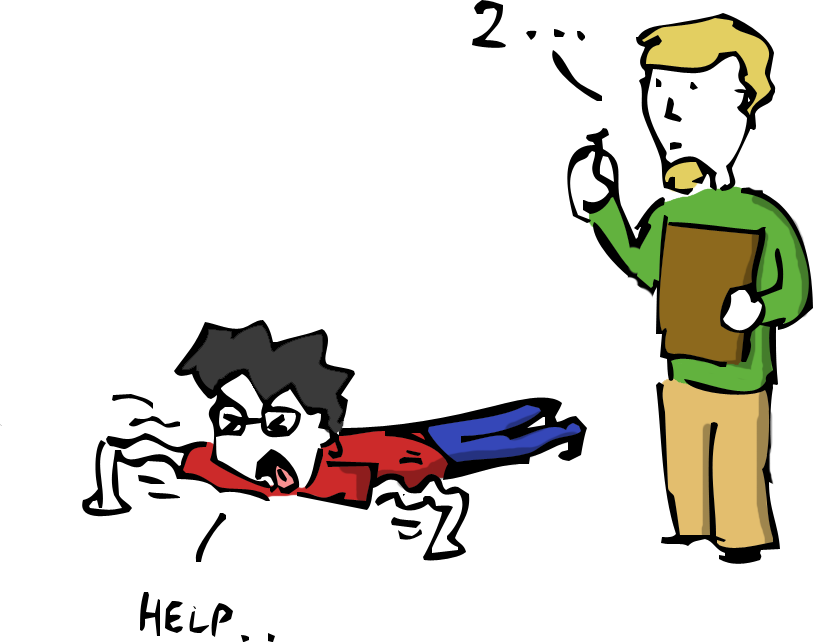
Everyone hates their first day of exercise, and for good
reason. Day one is really hard. That is because our bodies have a tendency to do
the bare minimum in terms of upkeep. If the hardest thing you do all day is
climb 5 steps in front of the building you work at before hopping in the
elevator, that is what your body will prepare you for. When you take a body
that is used to a sedentary lifestyle and force it to exercise, you shock the
system. That is why it is so important to do your research before taking on
anything too strenuous. If you think you might have a heart condition or some
other underlying problem, you might even want to talk to a doctor.
The great thing about exercise, however, is that it begins
to change your body very quickly. Within the first few weeks (if you stick with
it) your body will begin to adapt at the cellular level. Each of your body’s
cells contains mitochondria
which break down carbohydrates and fats and turn them into energy. Regular
exercise spurs your body on to pack as many mitochondria into cells as it can.
That means the food you eat is more likely to turn into energy than to be
stored as fat.

In addition to a mitochondrial population boost, your entire
circulatory system becomes more beefy. When you exercise, and especially when
you’re starting out, your muscles are basically screaming for oxygen and your
body is doing whatever it can to get it there. Oxygen travels in our blood, so
one way to carry more oxygen to the muscles that need it is to make more blood. According to
BodyBuilding.com, exercise can add an extra half litre of blood to
your body. The
heart itself also gets stronger as it is called on to pump more blood
quicker. Over time the heart will even increase in size to allow each pump to
carry the maximum amount of blood.

Finally, in terms of blood, your body adapts to exercise by
improving the highway along which it is carried. As you exercise regularly your
blood vessels become better at constricting and relaxing. They become more
elastic and let blood flow through them more smoothly. Over time your body even
builds more of the tiny
vessels called capillaries that supply muscles directly. This, along with a
stronger heart, is one of the main ways exercise adds years to your life. The
idea is that by forcing your heart to work hard in short bursts, it won’t have
to work as hard on average over your whole life. Trained people generally have slower
resting heart rates and don’t develop heart disease as often as untrained
people.

Exercise also damages your body in a way that ends up
working to your benefit. Each hard workout produces small
tears in your muscles. As your body works to rebuild the gaps between the
tears your muscles get bigger. The result is that there are more fibers that
are better able to contract and relax, meaning they can produce more force, making
you stronger.

Finally, one of the biggest benefits of exercise is also one
of the least expected: it makes your brain work gooder! Believe it or not, studies
have shown that exercise encourages your brain to build connections between
neurons and can even stimulate the growth of new brain cells, something that was long thought to be impossible
in adults. Regular aerobic exercise has been linked to increased brain volume
in areas like the hippocampus, which is responsible for memory. The upshot is
that if you go for a run today, you’re more likely to remember where your keys
are on your 90th birthday.

Ultimately exercise does a lot beyond what we’ve had time to
cover here. If there is a miracle method to achieve better health, feel better,
look better, and live longer it is working up a sweat. As much as we all want
to believe we can get ripped and live forever by taking a pill or buying one of
those belt things that electrocutes your abs, the only way to get there is by
putting in the work.

Wednesday, 4 February 2015
Concussions: Brain Damage for the Every-Man
Disclaimer: Our guiding principle here at Sketchy Science is the belief that
science is fun and that understanding the way things work can give you a deeper
appreciation for the world you live in. With that in mind, we try to have fun
and make jokes. We plan to continue that today, but keep in mind that this
topic is a serious one. We hope this information can promote some good judgment
among our readers.
 Have you ever hit your head really, really hard? Most people have done
it at least once and it is a pretty unique experience when it happens. Your
vision blurs to a total white out, you stagger on your feet, you can’t think or
speak for a few minutes, you might even lose consciousness. Few things cause a
person to panic as quickly as losing control of their own brain, but that is
exactly what a concussion is.
Have you ever hit your head really, really hard? Most people have done
it at least once and it is a pretty unique experience when it happens. Your
vision blurs to a total white out, you stagger on your feet, you can’t think or
speak for a few minutes, you might even lose consciousness. Few things cause a
person to panic as quickly as losing control of their own brain, but that is
exactly what a concussion is.
One of the coolest things about neuroscience is the ridiculous
relationship between cause and effect. If I put an electrode in your brain in
just the right spot and switched it on, I could make you pick your nose or slap
your face or yell out your deepest darkest secrets in a crowded operating room.
Your brain is an incredible network of cells that uses electrical impulses to
control every part of you. In a very real sense, those electrical impulses are you. That’s why a blow to the head messes you up so badly, so quickly.
Basically, a concussion is what happens when your brain and your skull
disagree about where they are moving to. Your brain is in motion, and as all
things in motion do, it wants to stay in motion. But sometimes something blocks
your way and brings your skull to a crashing halt. Examples may include a wall,
the sidewalk, or a 350 pound linebacker. When this happens, your brain slams
into your skull and as you might expect, bad things happen.

Blood vessels can tear, swelling and bruising can set in. Your brain
may be the most complex organ in your body, but when you smush it a little it
reacts the same way all your other organs do. The downside is that swelling and
tearing in your brain prevents your body from functioning properly.

The obvious symptoms (headache, blurred vision, unresponsive pupils)
can last anywhere from a couple days to a couple months. However, just because
you stop noticing the effects doesn’t mean you are back to 100%. Research has
shown that abnormal brain function can continue for years following a
concussion.
That may sound really bad, and in a sense it is, but the good news is
that if you rest and avoid blunt force trauma to the head following a
concussion your brain can heal itself and eventually get back to normal. Hits
to the head happen. I would even go as far as to say that if you never get a
concussion, you’re not being adventurous enough. But, that being said, there
are real and serious consequences to getting multiple concussions in quick
succession.

In the short-term the biggest threat from a bonk on an already concussed
noggin is Secondary Impact Syndrome. What happens with SIS that that your
already damaged blood vessels get pushed too far. Your brain hemorrhages,
swelling suffocates blood flow throughout your brain, and you either go into a
coma or you die. Not fun stuff.

Fortunately SIS isn’t very common. Unfortunately, multiple blows
to the head (even small ones) can also cause your brain to scar and degenerate.
This condition is called Chronic Traumatic Encephalopathy and it is increasingly
being observed in the brains of retired football and hockey players. People
with CTE in their 20’s and 30’s have the brains of 80 year old Alzheimer’s
patients. CTE can lead to memory loss, depression, loss of motor control, and
early death.
Clearly concussions are serious stuff and
your brain is something you should probably look into taking good care of. Wear
a helmet if you’re playing contact sports and if you even think you have a concussion, take the day off. Get some sleep (the
old advice about trying to stay awake is pure myth) and wait out the headaches.
It’s a dangerous world out there, so use your head… just not as a battering
ram.

Friday, 8 August 2014

Subscribe to:
Posts (Atom)