

Showing posts with label muscles. Show all posts
Showing posts with label muscles. Show all posts
Friday, 20 March 2015
Sketchy Fact #85: Figure Apes
Chimps are more than twice as strong as humans despite being about the same size because their brains have less precise control over their muscles. Their brains are designed to use all their muscles at once whereas humans are built to be precise.

Tuesday, 10 March 2015
Feel the Burn: What does exercise actually do to your body?
 Ask any doctor what the top five things are that you can do
to protect your health and they are likely to rhyme off a bunch of stuff you
already knew. Eat healthy, unprocessed foods. Sleep at least 7 hours a night.
Avoid stress. But few things are as likely to appear on virtually every list as
exercise. From the time we are in grade school right up until our teachers give
us the boot at prom we are encouraged to participate in physical education and
exercise. But why? What does exercise actually do to your body that is so great
anyway?
Ask any doctor what the top five things are that you can do
to protect your health and they are likely to rhyme off a bunch of stuff you
already knew. Eat healthy, unprocessed foods. Sleep at least 7 hours a night.
Avoid stress. But few things are as likely to appear on virtually every list as
exercise. From the time we are in grade school right up until our teachers give
us the boot at prom we are encouraged to participate in physical education and
exercise. But why? What does exercise actually do to your body that is so great
anyway?
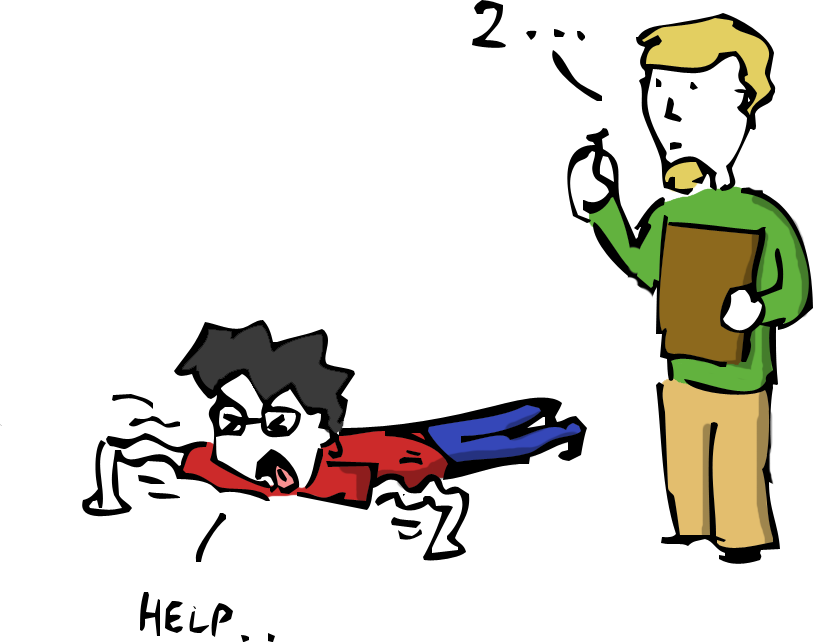
Everyone hates their first day of exercise, and for good
reason. Day one is really hard. That is because our bodies have a tendency to do
the bare minimum in terms of upkeep. If the hardest thing you do all day is
climb 5 steps in front of the building you work at before hopping in the
elevator, that is what your body will prepare you for. When you take a body
that is used to a sedentary lifestyle and force it to exercise, you shock the
system. That is why it is so important to do your research before taking on
anything too strenuous. If you think you might have a heart condition or some
other underlying problem, you might even want to talk to a doctor.
The great thing about exercise, however, is that it begins
to change your body very quickly. Within the first few weeks (if you stick with
it) your body will begin to adapt at the cellular level. Each of your body’s
cells contains mitochondria
which break down carbohydrates and fats and turn them into energy. Regular
exercise spurs your body on to pack as many mitochondria into cells as it can.
That means the food you eat is more likely to turn into energy than to be
stored as fat.

In addition to a mitochondrial population boost, your entire
circulatory system becomes more beefy. When you exercise, and especially when
you’re starting out, your muscles are basically screaming for oxygen and your
body is doing whatever it can to get it there. Oxygen travels in our blood, so
one way to carry more oxygen to the muscles that need it is to make more blood. According to
BodyBuilding.com, exercise can add an extra half litre of blood to
your body. The
heart itself also gets stronger as it is called on to pump more blood
quicker. Over time the heart will even increase in size to allow each pump to
carry the maximum amount of blood.

Finally, in terms of blood, your body adapts to exercise by
improving the highway along which it is carried. As you exercise regularly your
blood vessels become better at constricting and relaxing. They become more
elastic and let blood flow through them more smoothly. Over time your body even
builds more of the tiny
vessels called capillaries that supply muscles directly. This, along with a
stronger heart, is one of the main ways exercise adds years to your life. The
idea is that by forcing your heart to work hard in short bursts, it won’t have
to work as hard on average over your whole life. Trained people generally have slower
resting heart rates and don’t develop heart disease as often as untrained
people.

Exercise also damages your body in a way that ends up
working to your benefit. Each hard workout produces small
tears in your muscles. As your body works to rebuild the gaps between the
tears your muscles get bigger. The result is that there are more fibers that
are better able to contract and relax, meaning they can produce more force, making
you stronger.

Finally, one of the biggest benefits of exercise is also one
of the least expected: it makes your brain work gooder! Believe it or not, studies
have shown that exercise encourages your brain to build connections between
neurons and can even stimulate the growth of new brain cells, something that was long thought to be impossible
in adults. Regular aerobic exercise has been linked to increased brain volume
in areas like the hippocampus, which is responsible for memory. The upshot is
that if you go for a run today, you’re more likely to remember where your keys
are on your 90th birthday.

Ultimately exercise does a lot beyond what we’ve had time to
cover here. If there is a miracle method to achieve better health, feel better,
look better, and live longer it is working up a sweat. As much as we all want
to believe we can get ripped and live forever by taking a pill or buying one of
those belt things that electrocutes your abs, the only way to get there is by
putting in the work.

Friday, 15 August 2014
Sketchy Fact #53: Fighting Fingers
Your fingers don't have any muscles in them. When you move your fingers you are actually tugging their tendons using the muscles in your forearm.

Subscribe to:
Posts (Atom)