Showing posts with label viruses. Show all posts

Wednesday, 24 February 2016

The World’s Deadliest Animal: Zika Virus and the End of Mosquitoes

Mosquitoes are the worst. Nothing ruins a hike or a camping trip like a swarm of these blood-sucking, ear-buzzing, itch-inducing pests. Most of the world’s population will, at some point, be confronted with these horrid little animals and ask the inevitable question: do they even serve a purpose?

At their worst, mosquitoes go from being ridiculously annoying to horrifyingly dangerous. We may have a more palpable innate fear or sharks, lions, and snakes but let’s not forget that the deadliest animal on the planet is tiny and airborne. Mosquitoes spread disease like it’s their job. Malaria, Dengue Fever, West Nile, mosquitoes carry them all. It is an incredibly fortunate genetic quirk that they can’t spread HIV. For some reason, the virus dies when subjected to a mosquito’s internal environment, but if the day ever comes when a mutation changes that, then we could all be in big, big trouble.


The latest world health crisis is the spread of the Zika virus in Central and South America, brought to you (as you might have guessed) by these two-winged demons of the sky. Zika isn’t especially horrifying in its obvious symptoms. Whereas Ebola victims violently lose bodily fluids until their organs shutdown, 80% of people with Zika never suffer so much as a sniffle. For the one-in-five people who do get sick, things aren’t all that bad either as far as public health crises go. Most commonly, Zika will give you a rash and a fever that subsides in a week or so. At worst, you might get some dry, itchy eyes as well, but Zika is no worse than an afternoon at your aunt’s cat-infested bungalow if you happen to have an allergy.

The real threat from Zika is to pregnant women, or more specifically, their children. Zika has been linked to devastating birth defects, most famously microcephaly. Microcephaly is a condition where babies are born with small heads and brains. It is often responsible for severe mental deficits, which is what makes Zika so scary. A pregnant woman can pass the disease onto her baby without ever knowing she has it.
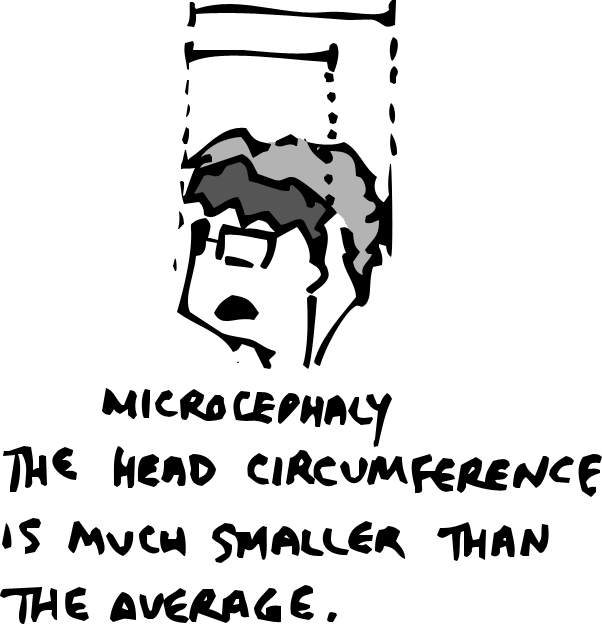


Zika is spread almost entirely by mosquitoes in tropical countries. A few cases have been linked to sexual contact between people, but the usual process is that a Zika-infected mosquito bites a person who becomes infected, and that person is bitten by more mosquitos, who in turn become infected and spread the disease to everyone else they bite. That means that Zika can spread rapidly and is very difficult to control. Health experts predict that eventually every country in the Americas, except for Chile and Canada, may become infected.


Researchers are doing their best to develop a vaccine, but the most effective method to fight Zika might be to target the mosquitoes themselves. If we decided that it were ethically justifiable to do so, we could potentially bring mosquitoes to the brink of extinction, using what we already know about genetics. Even before the current Zika outbreak, scientists had raised the question of wiping them of the face of the Earth. The method is shockingly simple. Genetically modified male mosquitoes are released into the wild to breed with females. The females lay eggs as normal, which hatch into the next generation. The only catch is that all of the offspring are sterile.


It may sound like a small-scale solution, but researchers are confident it could work. It has been estimated that genetically-altered males could wipe out 80% of the world’s mosquitoes in 36 weeks. Within a year, the world could be basically mosquito-free. It would be a canoeist’s paradise.


The problem is one of ethics and unforeseen consequences. First, should humans be allowed to wipe out another species just because we don’t like them and we are able to do it? What makes our existence so much more valuable than theirs? It’s especially troubling when you consider that humans, not mosquitoes, are the cause of much of what currently ails the world, from climate change to pollution to species extinction. Second, what if we’re missing something? What if mosquitoes play a vital role in our ecosystem that we don't yet understand and removing them brings it crashing down?

It may seem far-fetched, but consider the fact that the only reason most of the remaining rainforests in the world haven’t yet been cut down is because of the threat of mosquitoes, according to science writer David Quammen. If we wipe them out, who is to say that another Las Vegas won’t pop up along the banks of the Amazon, destroying one of the richest environments on Earth? These are big questions that require thought, but it is hard not to see the merit when you consider the pain one little pest can cause.


Wednesday, 10 September 2014

Ebola: The Good, The Bad, and The Gorillas

By now you have probably heard that there is a massive outbreak of Ebola virus going on in West Africa. Even if you have been living under a rock somewhere in the jungle it is likely that Ebola is on your radar, partially because that is where Ebola tends to hide out. As we head into the sixth month since the outbreak began, it is even starting to worry people far outside Africa, as infected people are transferred to facilities throughout Europe and North America for treatment, potentially exposing millions of more people to the disease. But before we all barricade ourselves in our bomb shelters, it is important that we understand what is actually going on.

The media tends to exaggerate things. As we all know, getting good ratings is often even more motivating than telling an accurate story. With that in mind, it is important to take a look at the science behind Ebola.

Unfortunately, one thing the media has gotten right is that Ebola virus disease is fantastically fatal to humans. As we learned back in Sketchy Fact#47, rabies is the deadliest virus on the planet with a 99.999% fatality rate. Ebola is one of the few viruses that plays in that same ballpark. There are 5 different species of Ebola virus and each has its own potency. Reston Ebolavirus is the least dangerous to people, with zero fatalities (you really don’t want Reston if you’re a macaque, however). Sudan Ebolavirus is the middle of the pack killer, with a fatality rate between 50 and 60%. The really scary form of the virus is Zaire Eboloavirus, with a historical fatality rate of around 90%. The really bad news? The current outbreak is the Babe Ruth of Ebola.


Ebola is named after the Ebola River in the Democratic Republic of Congo, near the location of one of the first ever outbreaks and now possibly the least desired honeymoon spot on the planet. First discovered in 1976, Ebola is a relatively new scourge on the super-deadly disease circuit. Since the first few small outbreaks in the 70’s the virus has popped up sporadically, all but disappearing until a string of fatal outbreaks in the mid 90’s. However, nothing compares to the current outbreak. Before 2014 the deadliest ever Ebola outbreak occurred in 1976 and killed 280 people. So far this year, over 2,000 people have died.


Ebola is so deadly because of the way it spreads through the body, actually using a person’s own immune system against them. When the virus infiltrates a cell it takes over the cell’s ability to reproduce DNA, hijacking it to make copies of its own genetic code. Ebola is an RNA virus, meaning that instead of the double helix DNA ladder we are all used to, there is only one strand to be copied. This makes the process fast and fierce. Once the cell is overwhelmed with virus is bursts and the immune system kicks in.


The immune system sends out cells called cytokines to attack the virus. However, where most viruses are overwhelmed like a physics major on a date with a cheerleader at the mere site of a cytokine, Ebola has the charisma of George Clooney. Rather than being destroyed by the cytokines, the virus hitches a ride and uses them to spread around the body into the tissue that makes up the walls of blood vessels. Ebola next attacks the liver, killing more cells and stopping the immune system's alarm chemicals from being cleared from the blood. The result is that the immune system keeps sending out troops and Ebola keeps bringing them over to the dark side. The outward symptoms resemble a really terrible flu including fever, vomiting, and diarrhea. The latter two symptoms including the presence of blood in the later stages or the disease.


As the virus eats away at the circulatory system blood clots form all over the body, clogging arterties. Eventually organs begin to shut down and blood vessels rupture causing massive internal bleeding. Contrary to popular belief, and in opposition to what the historic misnomer “Ebola Hemorrhagic Fever” would lead you to believe, most patients don’t bleed externally. Instead bruises form as blood escapes vessels within the body. Most people don't die of blood loss, however; it is organ failure that gets them. Ebola can kill you within 7 days of getting into your body.

This is all rather terrifying news, but there is hope. Ebola is spread by contact with bodily fluids, so to become infected you need to be closely caring for, or intimately interacting with, an infected person. The reason the virus has been able to spread so effectively in Africa is that local customs in rural villages at the centre of the outbreak involve close contact with the bodies of recently dead family members. On top of that, the health care system in many African countries just isn't equipped to contain an epidemic. Another deeply uncomforting reason the virus isn’t likely to cause a global pandemic is that it kills people very quickly, leaving it little chance to infect new hosts.


Ebola, like rabies, is thought to use bats as its natural reservoir. It lives in peace causing no trouble to the bat or anyone else under normal circumstances. The problem, or “spillover,” occurs when people eat the bats as bush meat or when another animal, say a gorilla, stumbles upon a piece of fruit that an infected bat was recently gnawing on. In fact, Ebola is as scary for gorillas as it is for people. It is thought that since 2000 Ebola has killed over 5000 gorillas in central Africa, severely damaging an already threatened population.


So there it is, the truth about Ebola. Here’s hoping that the effected countries are able to educate people soon enough to stop the current outbreak before the death toll gets much higher. From there we can worry about educating the gorillas.


References:


Friday, 4 July 2014

Sketchy Fact #47: World's Deadliest Virus

Until 2004 when an experimental treatment saved the life of Jeanna Geise, rabies had a 100% fatality rate. It remains the deadliest known virus on the planet once an infected person shows symptoms.


Wednesday, 16 April 2014

Infecting with Immunity: How Vaccines Actually Work

One of the major challenges scientists face is communicating important information to the general public. As brilliant as many of them are, hours spent in a lab hunched over a microscope do little to improve a person’s ability to explain things simply and comprehensibly. Complicating things further is the fact that scientists are trained to constantly question and test their ideas so they say a lot of things like “we believe” and “these results suggest” when really they mean “I am sure this is true, these are facts.” When you’re talking about the evolutionary history of Amazonian frogs or something like that, it tends not to matter; but occasionally a topic comes along where a clear explanation of how things work is even more important than a detailed reporting of the facts. Vaccines are one of those topics.


Right now in the Fraser Valley of British Columbia Canada, several hundred people (mostly children) are infected with an unpleasant and occasionally fatal illness that scientists basically cured a long time ago. Over 200 cased of highly contagious measles have popped up in the region and a few infected people have found their way to Ontario and the Atlantic coast, largely because the Fraser Valley has one of the lowest measles vaccination rates of anywhere in Canada (between 70 and 80%).

Much of the problem lies in the fact that vaccines inject viruses and bacteria into people’s bodies. Generally speaking we are taught that this is a bad thing, so our instinctive reaction is to avoid it. Teaching people that infections are bad and then telling them that you need to inject them with a virus is generally a hard idea to sell because, quite frankly, it makes you seem insane.


The truth is vaccines actually are made of the viruses and bacteria that they are trying to prevent. To understand why that is necessary we need to understand the immune system. You see, when an unfamiliar virus or bacteria makes its way into your body it sounds an alarm that activates an immune system response. These invading organisms are called antigens and their goal is to replicate as much as possible. 


Since our bodies are not designed to handle that sort of thing the results can be very bad, resulting in sickness and sometimes even death.


Your body doesn’t like dying, so once that alarm is sounded you’re white blood cells get to work. Your T-cells identify which cells in your body are infected by the intruder and destroy then to try to contain the infection. Meanwhile your B-cells produce antibodies, which attack antigens directly and try to prevent them from infecting more of your body’s cells.  


Vaccines take advantage of this response by tricking your body into thinking it has been infected by a specific virus or bacteria, but in order to do that they need to introduce some of these intruders into your body. Obviously the goal of vaccines is to prevent infection so it wouldn’t make much sense to pump you full of measles. Instead, vaccines use a weakened or inactive (dead) form of the intruder/antigen.

Vaccines that use weakened antigens are called live-attenuated vaccines, because they inject still living infections. The trick with live-attenuated vaccines, however, is that they use the dumbest, laziest individual viruses and bacteria possible. To create these vaccines scientists take something dangerous like measles and give it a relaxed, cushy life in a test-tube. The infection is continually transferred from one test tube to another, each time getting a little more used to the good life. After enough time and transfers (77 in the case of the measles virus) the infection is so used to not have to do anything to survive that it has lost most of it’s tenacity. When injected into the bloodstream these infections reproduce at most 20 times rather than the thousands and thousands of times they normally would. Your body is easily able to identify and destroy these antigens.


The cool thing is that you immune system has a great memory, so once the infection is gone your B-cells continue to produce the antibodies that can kill it, making you immune for life.

Inactivated vaccines use dead viruses that don’t reproduce at all. The benefit to this is that there is zero chance of any kind of negative reaction (live-attenuated vaccines can lead to soreness at the injection site and occasionally some mild symptoms), the downside is that you often need multiple shots to maintain immunity because your body thinks the disease is a dud.


One of the most publicized fears about vaccines is so-called link between vaccination and autism. This link is a myth. It arose when some people discovered that a disinfectant used in some vaccines (Thimerosol) contained mercury. There is however no reliable research supporting this claim (Parker et al., 2004). Even still, most vaccines now contain no Thimerosol because the companies that produce the treatments want to make parents feel as safe as possible. One real health concern that goes along this vaccines is the risk that some flu shots pose to people with egg allergies. Since influenza is grownin eggs to create the vaccine, there is a chance it can cause an allergic reaction. If you’re allergic to eggs to can still get a flu shot, you just have to talk to your doctor about getting one of the varieties that is not developed using eggs (there are plenty).


Vaccines are clearly a very cool topic. They have eliminated diseases like polio and smallpox from much of the world and continue to save millions of lives each year. In closing, I just want to say that it is okay to question things. Skepticism is a great quality that can lead to critical thinking and amazing ideas and innovations. That being said, the science behind vaccines is inarguable. They prevent needless suffering and protect at-risk people from terrible diseases. If you have questions about them, by all means continue to read up on the subject; but rest assured, vaccinating yourself and your children is the most responsible decision to can possibly make. It’s a no-brainer.